

Zip On! Keep Corridors Clear
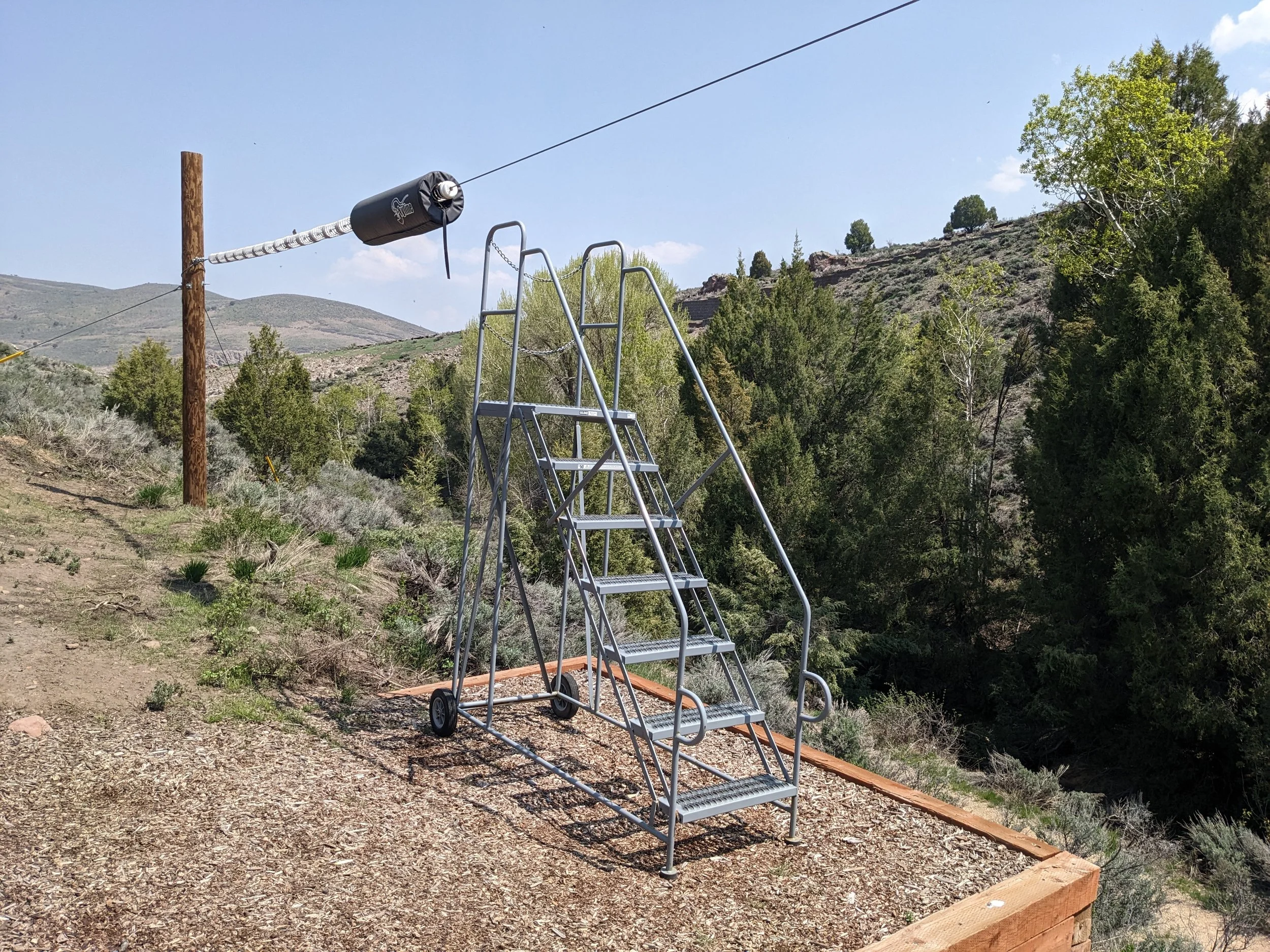
ACCT Standards Chapter 2 B.2.17 — Keep Corridors Clear
Many operational issues in challenge courses don’t come from major equipment failures or dramatic mistakes. More often, they come from small details that were assumed, skipped, or simply missed in the moment. One of the simplest of these details is confirming that the activity corridor is clear before a participant begins an element. It’s a straightforward concept, but one that can easily be overlooked during busy operations.
An activity corridor is the space a participant travels through while completing an element, such as a giant swing or zip line. This includes the path between launch and landing, as well as areas where a participant could come into contact with people, equipment, or structures.
Depending on the course, this may include:
The span of a zip line
A landing or braking zone
The swing arc of a dynamic element
The area beneath or beside the participant’s travel path
Anything entering this space has the potential to interfere with the activity.
Challenge course environments are dynamic. Even when operations are running smoothly, conditions can change between participants. A guest may pause longer than expected in a landing zone. A guide may step forward to assist someone exiting an element. Loose equipment or tools may be temporarily placed in the wrong area. Environmental factors such as wind can shift branches or debris into the travel path. One time a cow ran right in front of my while zip lining, almost kicked the thing. Because of this, a clear corridor should never be assumed just because the previous participant completed the activity without issue.
The most effective operators don’t treat corridor checks as occasional reminders. Instead, they make them part of their pattern of practice. A pattern of practice is the routine guides follow every time they send a participant. These repeated actions create consistency and reduce the chance that an important step will be skipped.
For many teams, that routine looks something like this:
Confirm the participant is ready
Verify equipment and connections
Check communication between guides
Confirm the activity corridor is clear
When this process becomes habitual, it only takes a moment, but it helps ensure the path ahead is ready for the next participant.
Operational safety on a challenge course is built through layers: equipment, inspections, training, and procedures. The daily habits of guides are one of the most important layers because they are repeated hundreds of times throughout a season. Simple checks like confirming a clear corridor help prevent situations where guides must react to unexpected obstacles or participants entering an active path. By building this awareness into the routine, operators create more predictable and controlled activity cycles.
Many safety practices are complicated and technical. Others are simple but powerful when they are applied consistently. Confirming that the corridor is clear is one of those practices. It takes only a few seconds, but when it becomes part of the pattern of practice for guides and operators, it helps ensure that every participant begins their activity with a clear and unobstructed path ahead.
Refer to ANSI/ACCT 03.2019 for the full standard language.