

What “Effective Implementation” Really Means for Personal Safety Systems
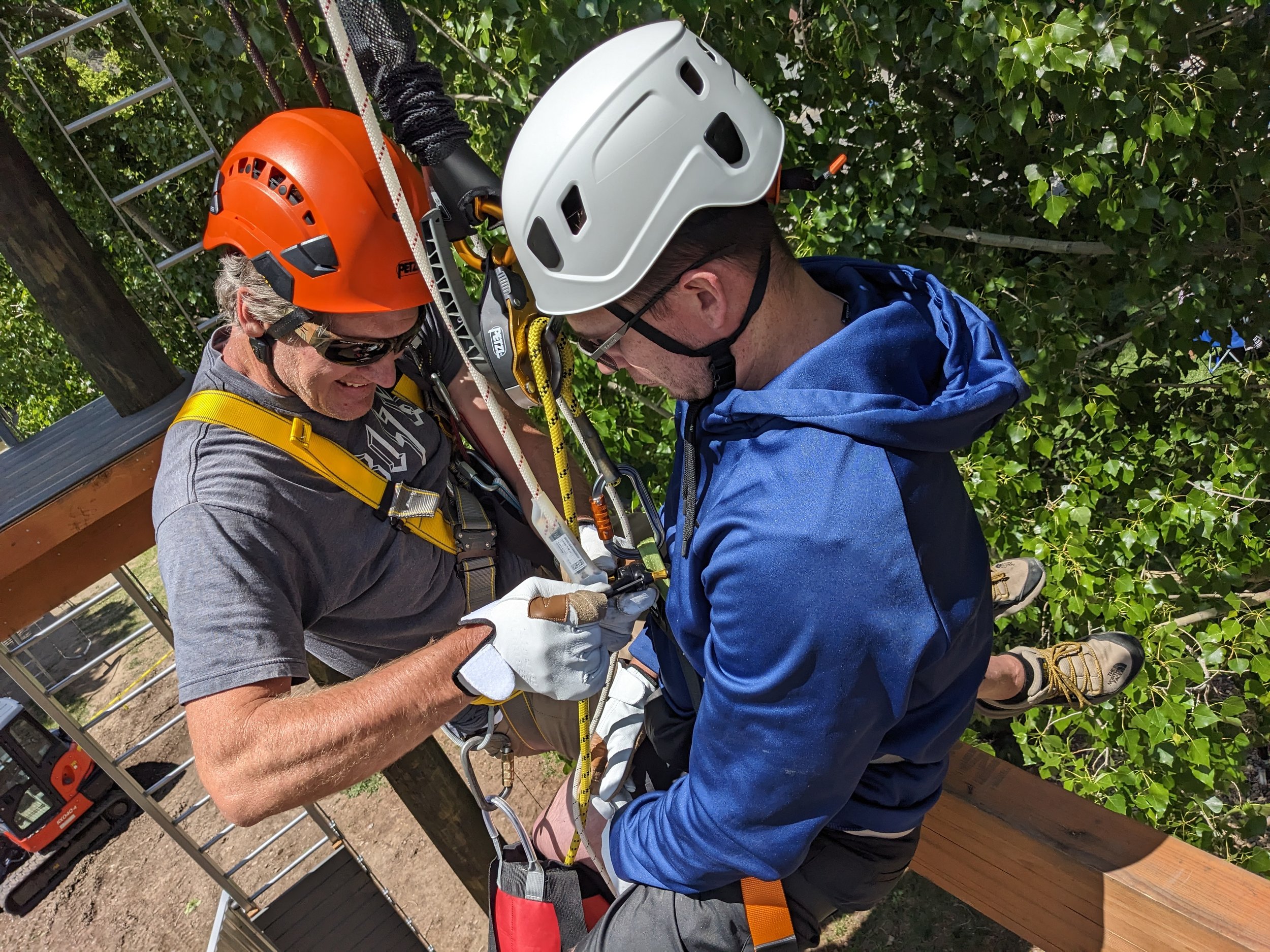
ACCT Standards Chapter 2 C.2.3.9 — Implementation > Equipment
When programs think about personal safety systems, most focus on the gear: harnesses, lanyards, carabiners. But ACCT Standard C.2.3.9 isn’t about having equipment on hand. It’s about how systems are implemented — every day, every participant, every time.
Implementation is the difference between a system that exists and a system that actually protects participants.
1️⃣ What Effective Implementation Looks Like
The standard emphasizes four critical areas:
Proper method and technique — Follow the correct steps consistently.
Intentional participant positioning — Ensure the participant is positioned correctly for each task.
Clear, consistent communication — Instructions are understood and reliably followed.
Continuous fall protection — Participants must be protected at all times, not just most of the time.
Consistency is key. Discipline ensures that the critical steps are achieved every time.
2️⃣ Where Programs Often Drift
Even programs with strong systems can fall short in execution. Common gaps include:
Missing one of the critical elements for a participant
Assumptions that a participant is secure because the equipment is in place
Inconsistent checks or verification during routine operations
The focus isn’t identical behavior — it’s reliable protection for participants.
3️⃣ Why Implementation Discipline Matters
Execution is what ensures safety. Even well-maintained equipment is ineffective if staff fail to consistently hit the critical steps.
Programs that emphasize consistency in execution see safer operations, empowered staff, and more resilient programs.
4️⃣ Supporting Staff to Implement Effectively
Effective implementation requires:
Regular staff training focused on the critical points
Observation and feedback to reinforce correct execution
Clear guidance on the outcomes that must be achieved every time
Periodic operations reviews to ensure consistent protection
At Helix Construction, we help programs strengthen these habits through training, audits, and operational support, ensuring staff consistently execute the critical elements of every system.
Personal safety systems are only as strong as their implementation. Understanding and applying Standard C.2.3.9 in practice ensures participants are protected and programs operate consistently.
To evaluate your team’s implementation practices or strengthen consistency across your operations, contact Helix Construction for an operations review or training.
Refer to ANSI/ACCT 03.2019 for the full standard language.